1 jar
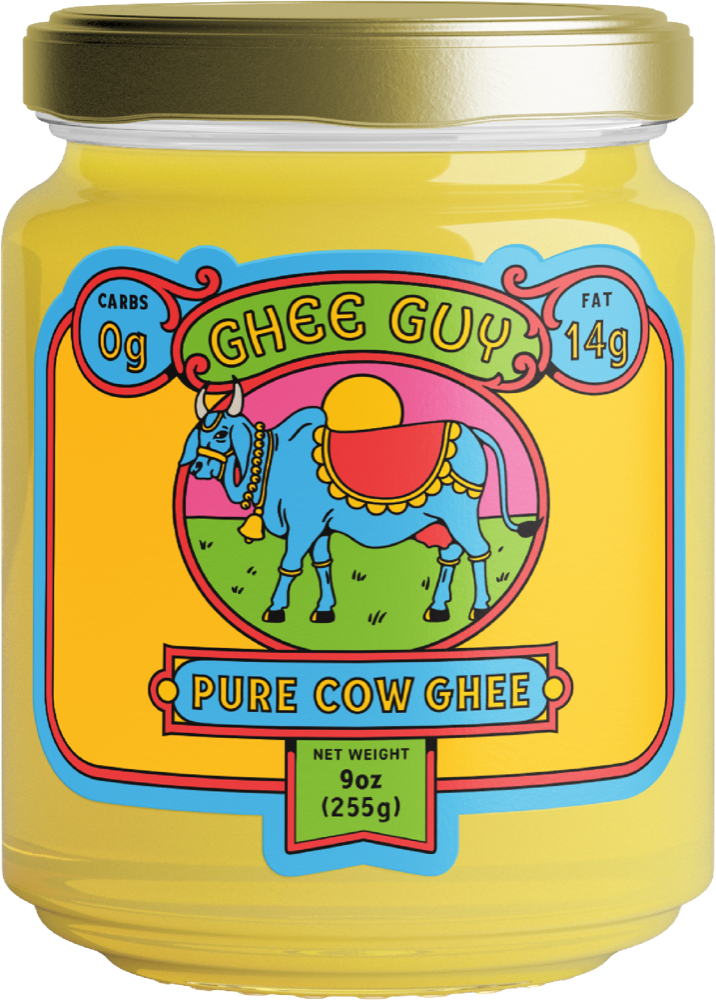
CARBS0g
FAT14g
The everyday jar
One 9 oz (255 g) jar · for eggs, rice and the morning pan
$20.00
$20.00 per jar

Grass-fed ghee made from naturally cultured butter, slow-simmered in small batches for a deeper, nuttier, richer gold.
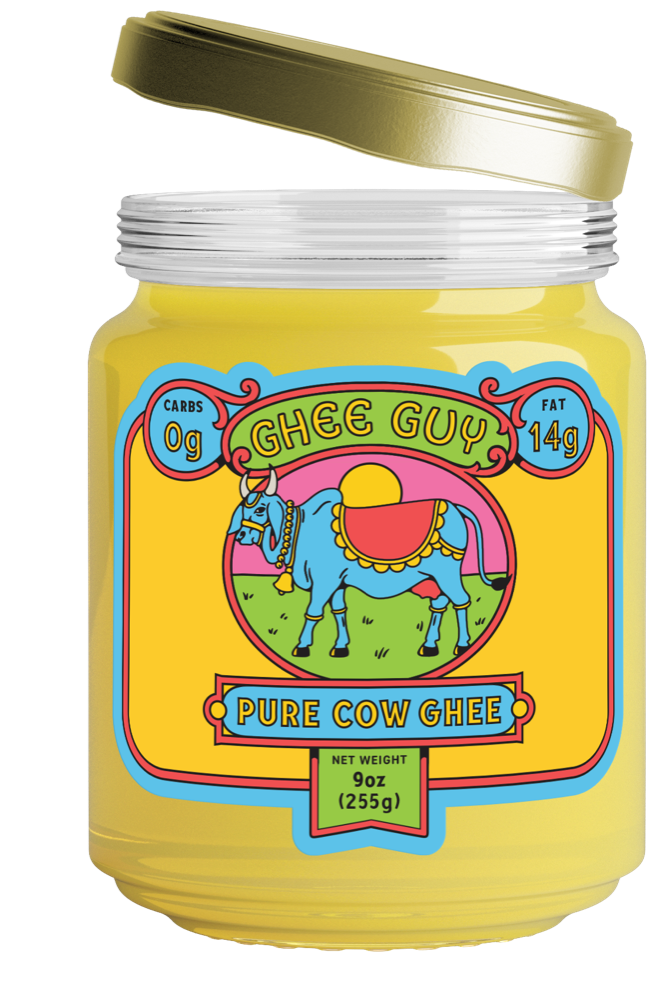

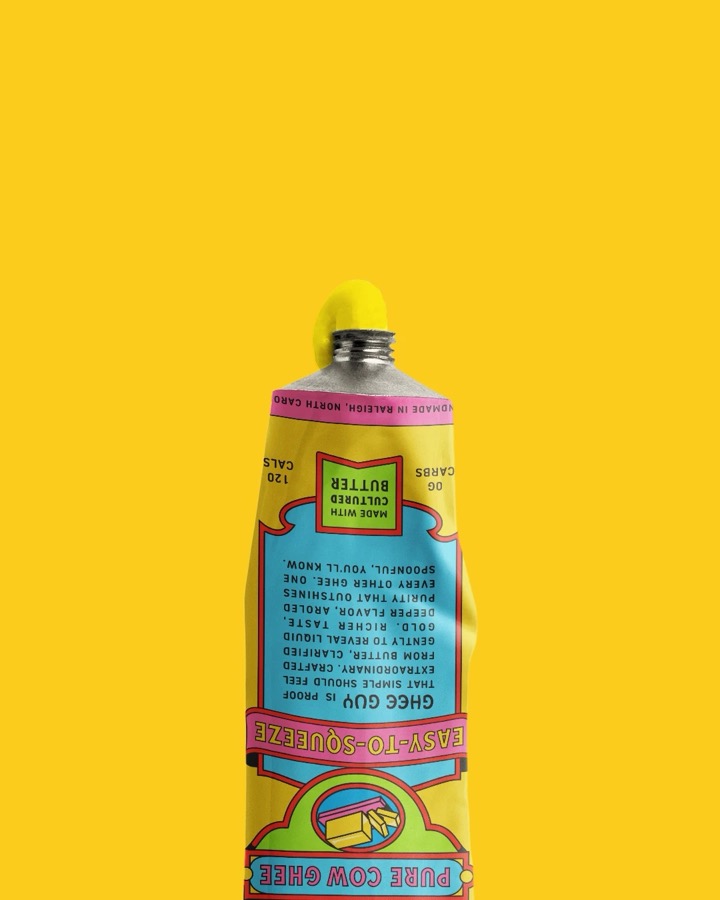
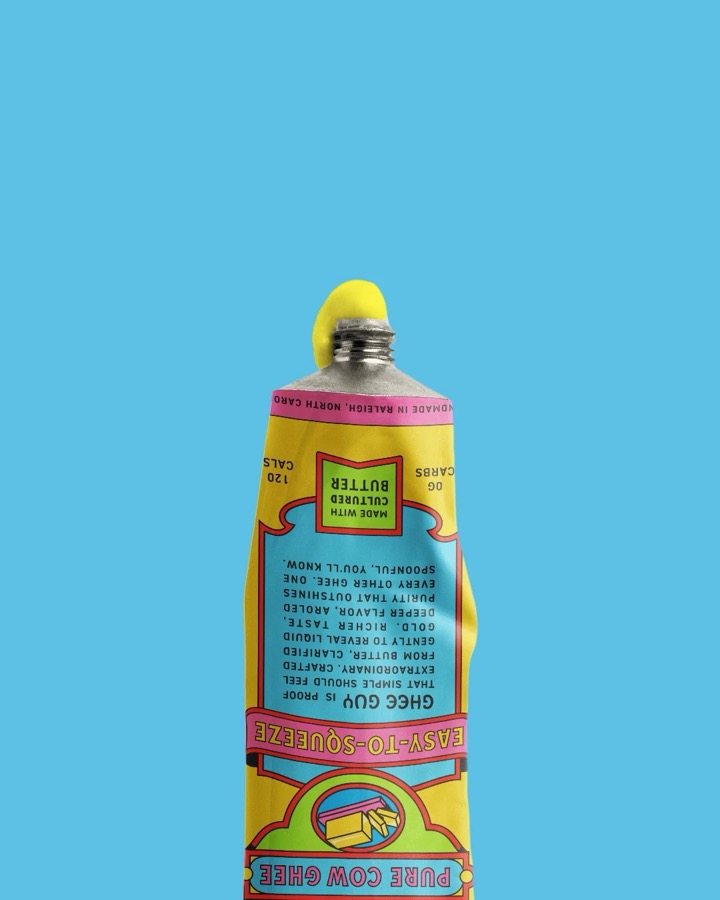
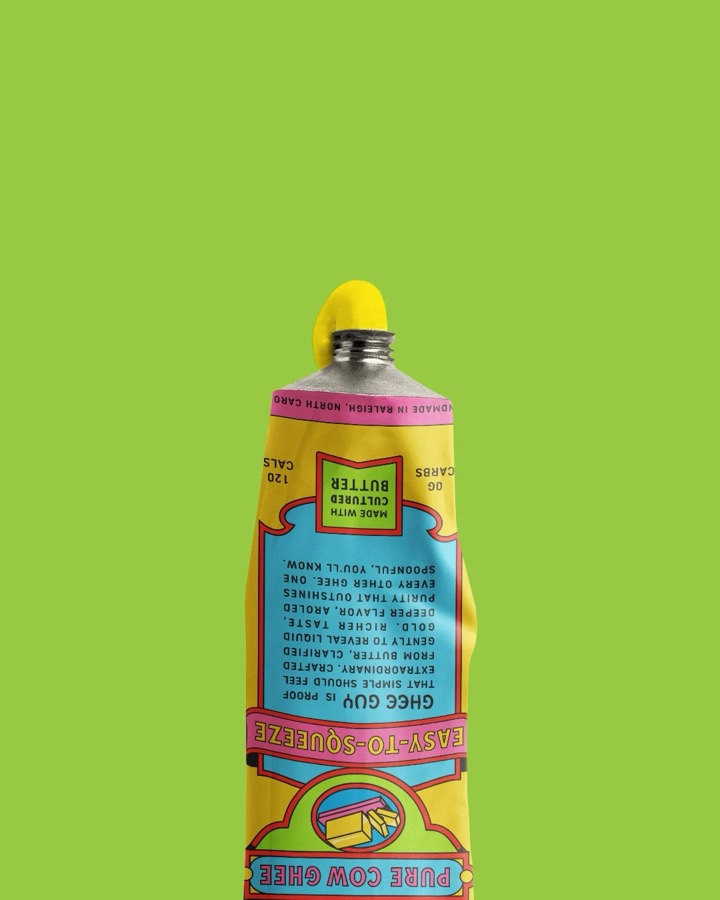
One jar, or stock up and save. A squeeze tube is on the way. Cultured, clarified and hand-poured.
Ghee is traditional clarified butter: a pure, golden fat treasured in Indian cooking and Ayurveda for over 4,000 years.
It's gently simmered until the milk solids and lactose are gone, leaving something naturally lactose-free, nutrient-dense and rich in vitamins A & E. It's one of the most stable fats you can cook with.

Most commercial ghee starts with plain, uncultured cream. Ours starts with butter that's naturally fermented with live cultures, just like yogurt. That extra step brings a subtle tang and a deeper nuttiness.

Cream from cows on small family farms in Georgia. No rBST and no added hormones, so it's naturally richer.

Fresh cream ripened with live cultures, then slow-churned in small batches for complex flavor and natural tang.

Gently simmered and clarified by hand into a pure golden, lactose-free ghee with deep richness and a subtle brightness.
Grab a jar off the shelf around the Triangle.
Plus pop-ups at local farmers markets. Follow along on Instagram for dates.
Ghee is butter with the water and milk solids cooked out of it.
You melt butter and hold it at a low simmer. The water steams off. The milk solids sink to the bottom and slowly toast, and then they get strained out.
What's left is pure golden fat that smells like toasted nuts. One ingredient. Nothing added.
Two things we can say plainly.
It takes high heat. Ghee holds to about 480°F, where butter starts smoking around 350°F and olive oil around 375°F. Fat that smokes has started to break down. Ghee doesn't do that in a home kitchen.
Almost no dairy is left. The lactose and casein leave with the milk solids, which is why many people who don't get along with butter get along with ghee. And their gut says thank you to them.
Beyond that: ghee has been used in Ayurveda for thousands of years, valued for digestion and as a carrier that helps fat-soluble nutrients absorb. That's a long tradition and we'll leave it as one. We're not going to tell you what a fat will do for your body.
Anything you'd use butter or oil for.
It takes heat well (up to 480°F) so it won't smoke when you sear, roast, or fry. Melt it into dal, into coffee, over popcorn. Spread it on warm toast. Perfect for vegetables, eggs and meat.
One jar does everything :)
Ghee has one ingredient, so the butter is the whole thing. Ours is cultured.
The cream sits with a live culture (the healthy and good bacteria) for hours before it's churned, the same way yogurt is made. That gives it a tang and a deep nutty flavor, and it carries all the way through into the ghee.
Most butter is sweet cream, churned right away. It's faster. Cultured is the older way, and it will make your gut very happy!
Georgia. A husband and wife started making it in 2012 with a small mixer and a stack of 19th-century dairy journals, and they still make it the same way.
The cream comes from grass-fed cows on small local farms nearby, so it's fresh when it arrives. The cows are never given hormones, and a diet high in grass gives their cream more vitamin E, beta-carotene, and omega-3s than it would otherwise have.
Before churning, the cream is cultured — held with a live culture for hours at an exact temperature, the same way yogurt is made. That's where the tang and the depth come from. Most butter in America skips this. It's churned straight after pasteurization, which is faster and leaves it tasting like not much, so flavoring often gets added back in.
Then it's churned slowly, in small batches, adjusted by hand for the season. It carries more butterfat than most butter, which means less water and more flavor. It's cut and wrapped by hand, so no two blocks look quite the same.
Start to finish, it takes about twenty times longer to make than industrial butter.
Almost, but not quite.
Lactose and casein live in the milk solids, and nearly all of those get strained out during cooking. That's why a lot of people who avoid dairy do fine with ghee.
No. There's almost no water left in ghee, so it keeps on the counter for months. The fridge won't hurt it, but it'll be too hard to scoop.
Use a dry spoon each time. Water and other particles are the only things that will spoil it.
Same as butter or oil. A spoonful in a pan, a spoonful in rice or vegetables, a small amount on toast. It's more concentrated than butter because the water's gone, so you may find you use a little less.
Not quite. Ghee is super clarified butter. Clarified butter is cooked just long enough to separate the milk solids, then those get skimmed off. Ghee is cooked longer, so the solids sink and toast before they're strained out. That's where the nutty flavor comes from.
A year unopened. About three months once you've opened it, or six in the fridge.

Shops, cafés and restaurants: we sell 9 oz jars by the case of 12. Ask us for the wholesale pricing sheet.